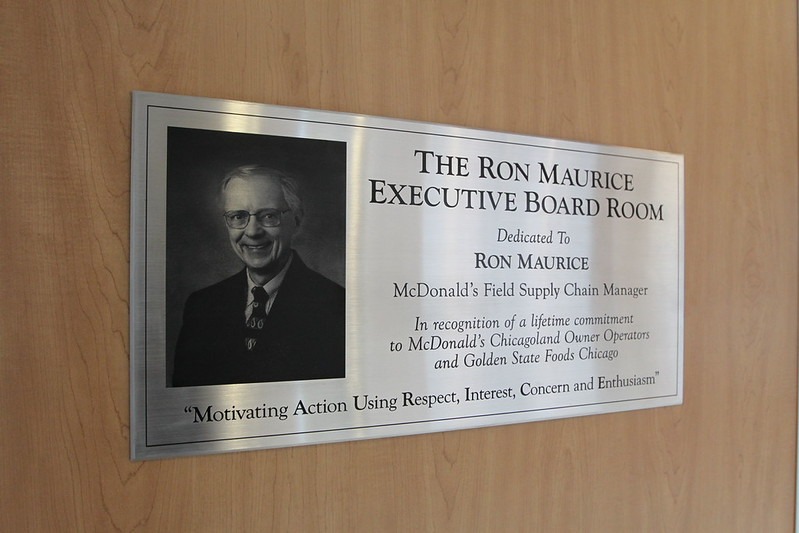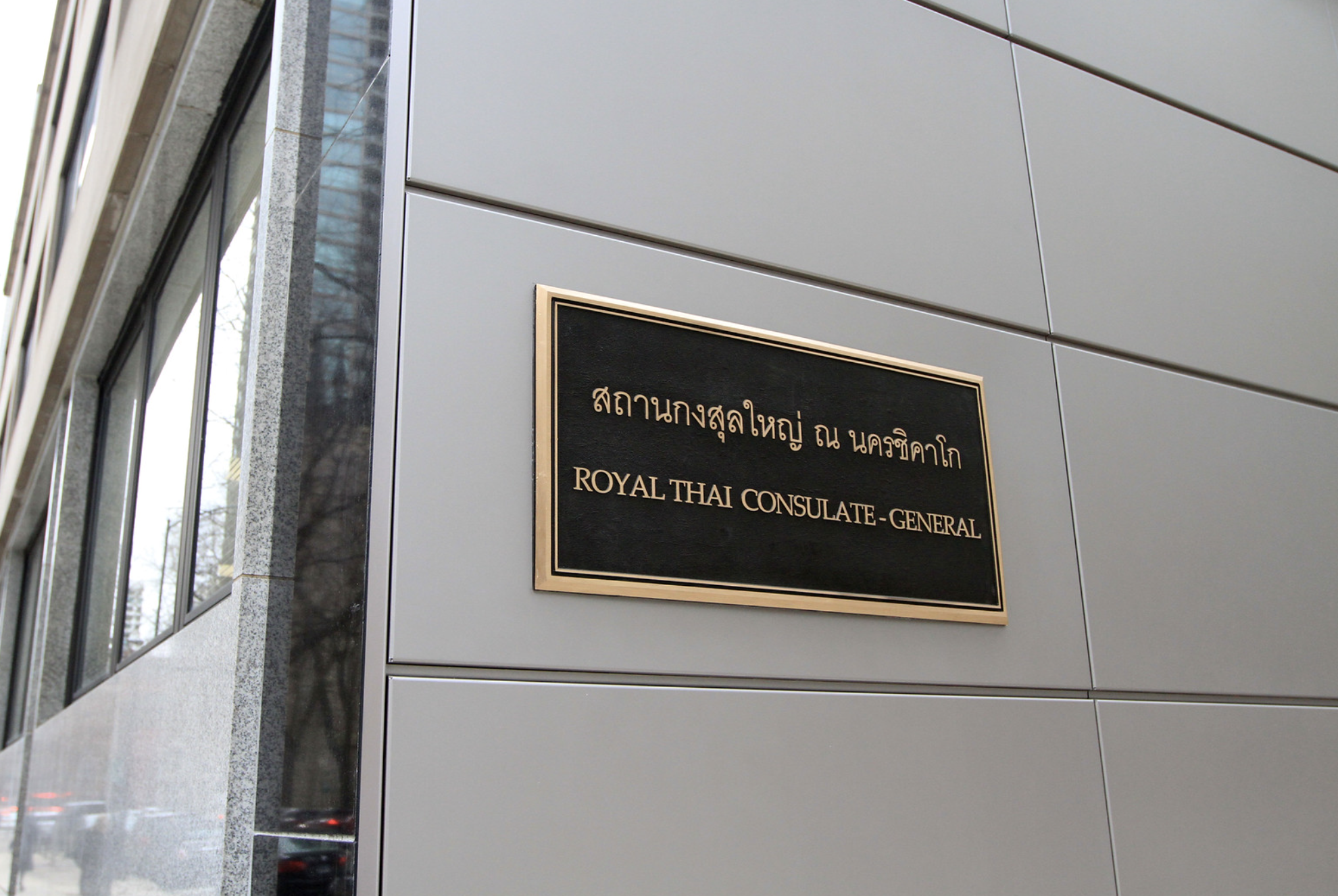
Embassies and consulates need official signage, and bronze is a great option for these signs. When planning a bronze plaque embassy or consulate project, details like the plaque’s purpose, artwork, size, finish, and more all affect how the final sign will look and feel.
Because bronze has a striking appearance and can be used both indoors and outdoors, it’s a common choice for government and civic plaques. But creating a bronze plaque is more than just choosing the material.
In this article, we’ll walk you through the decisions you’ll need to make when ordering a custom plaque for an embassy, consulate, or similar government setting.
What Is a Bronze Plaque Used for at an Embassy or Consulate?
Bronze plaques can serve several purposes at an embassy or consulate. In some cases, they can be used for building identification, while in others, they can be used to display official seals or commemorate a dedication.
Some of the most common applications for bronze plaques include:
- Embassy or consulate identification
- Official government seals and crests
- Building dedication plaques
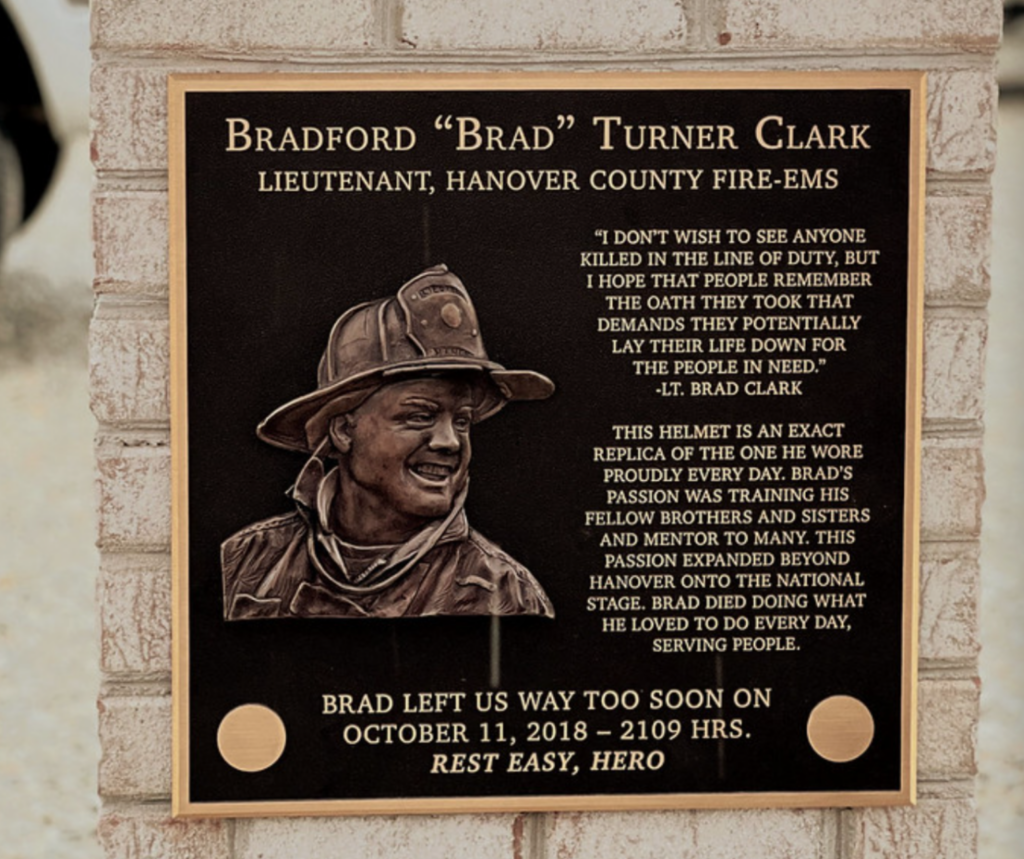
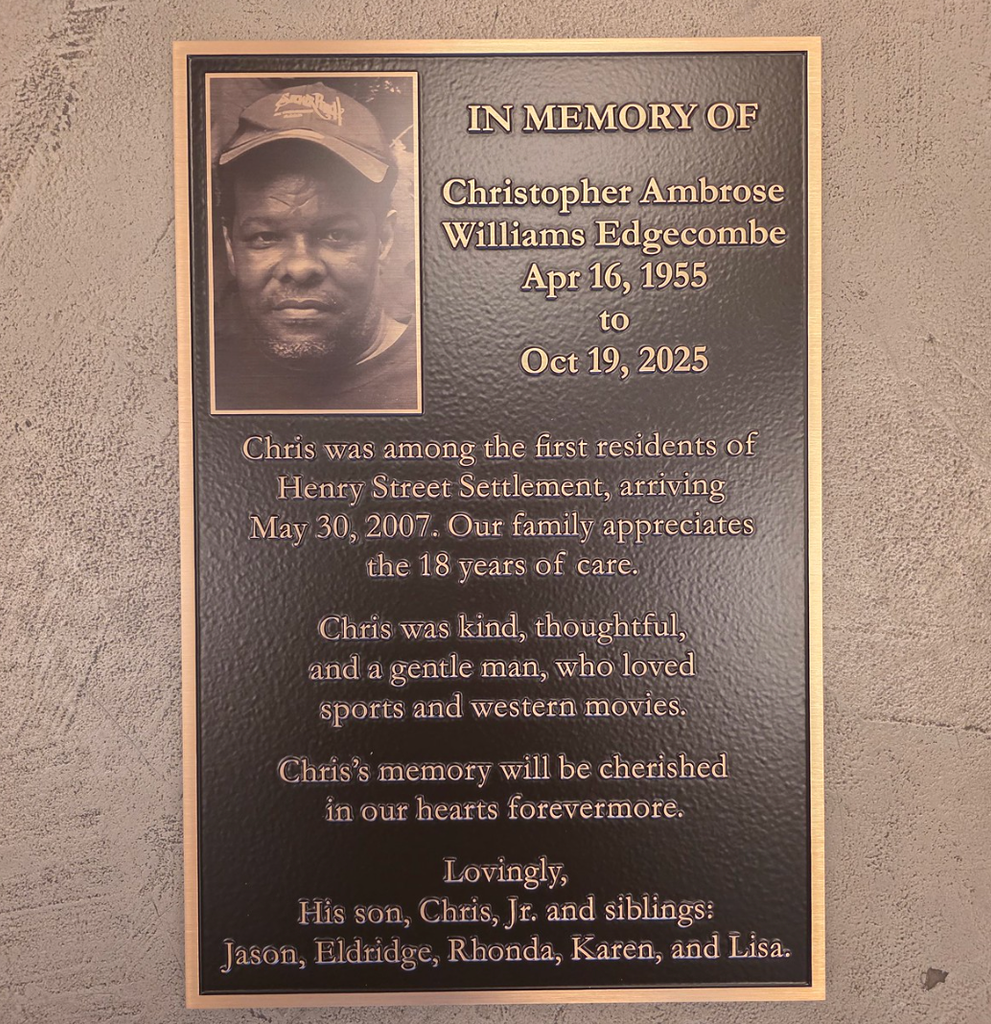
- Commemorative plaques
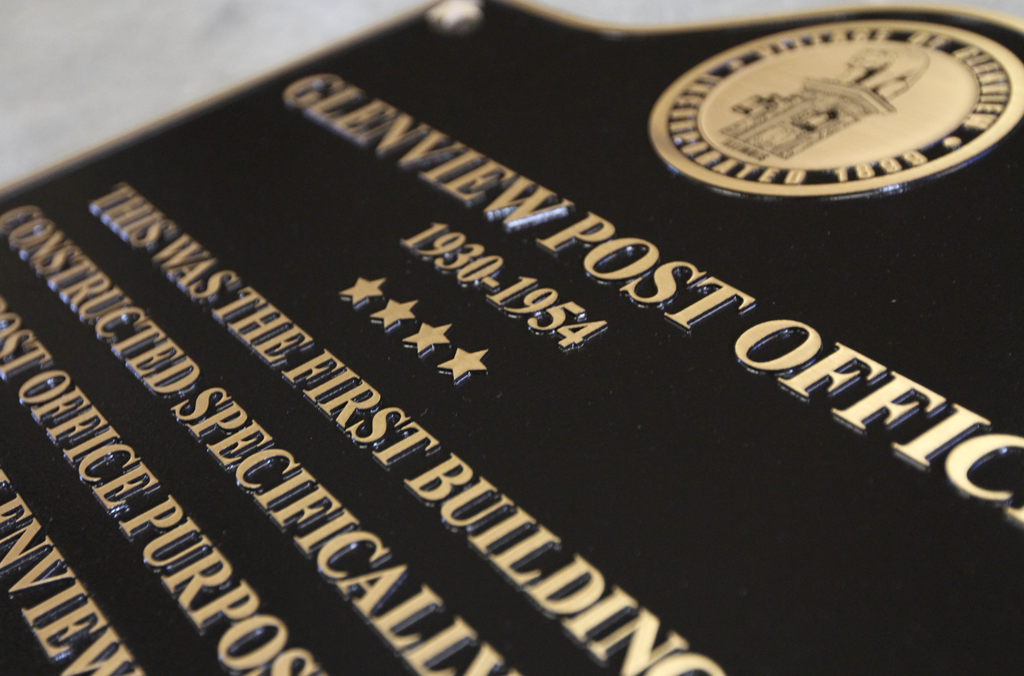
- Historical markers
- Office or department identification
- Recognition of diplomats or officials
- Plaques marking renovations or openings
- Memorial signage
Because these signs represent governmental institutions, it’s important that they remain accurate and have a pristine presentation. You should carefully review all names, titles, dates, seals, and translations before moving a plaque into production.
1. Start With the Purpose of the Bronze Plaque
Before you choose details like size or finish, you should determine what you need the plaque to accomplish. Ask yourself questions like:
- Does it need to identify the embassy or consulate from outside?
- Is it displaying an official seal or coat of arms?
- Is it commemorating a building opening or dedication?
- Does it need to tell a historical story?
- Will visitors read it from several feet away or up close?
- Is the plaque primarily informational, ceremonial, or both?
The purpose of your sign ultimately affects nearly every other design choice. For example, an exterior identification plaque may need large, highly visible lettering to be read quickly, but a commemorative plaque viewed at close range can have more text and finer design details.
2. Decide What Information the Plaque Needs to Include
Once you know your plaque’s purpose, figure out what actually needs to be on it. For an embassy or consulate, you may include:
- Official country name
- Embassy or consulate name
- Government seal or coat of arms
- National emblem
- Dates
- Names and titles
- Dedication text
- Historical information
- Multiple languages
Keep in mind that you don’t want to just fill the plaque with tons of information just because there’s extra room for it. You don’t want your plaque ot become difficult to read, and that can happen if you cram way too many details in there.
Instead, establish a hierarchy with your plaque. The most important information, such as your embassy’s name, should get the biggest visual space, then supporting information can be put underneath or around it.
3. Consider How to Reproduce Official Seals and Crests
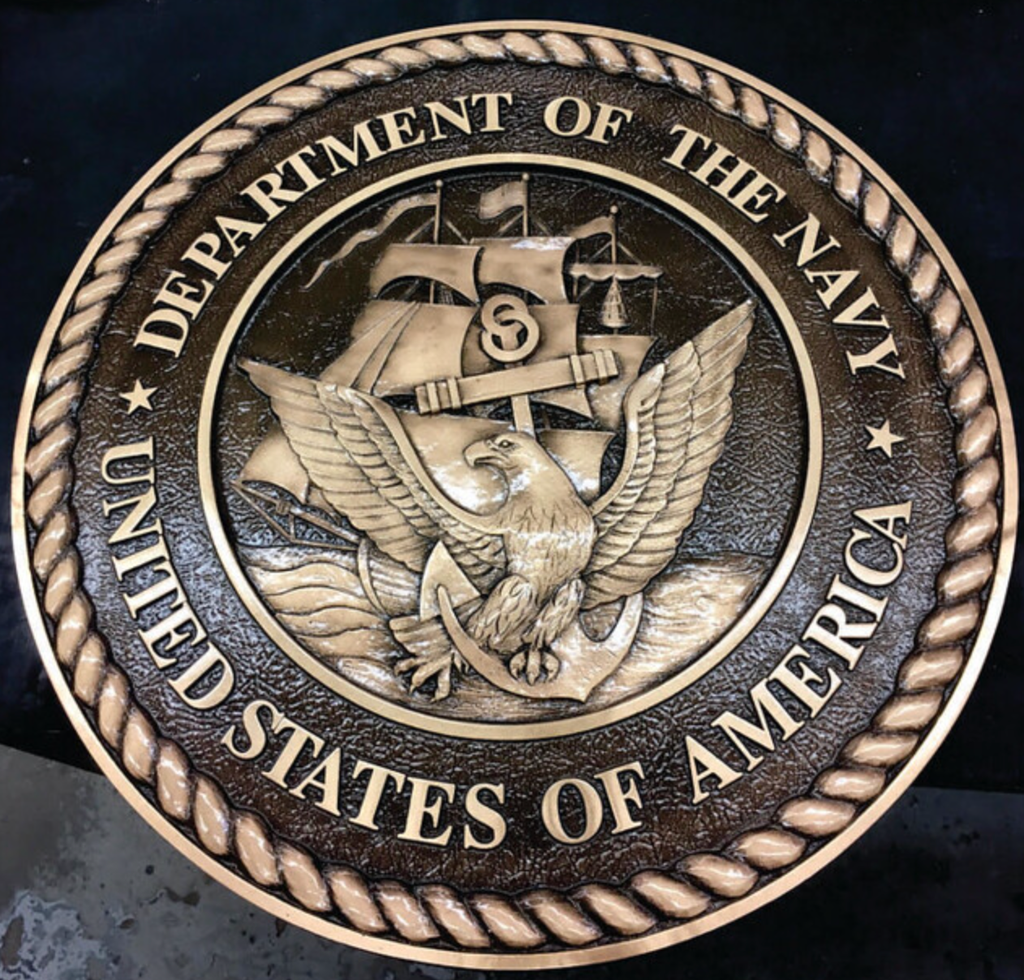
One of the most important considerations for your bronze plaque embassy project is the official artwork you’ll use. Embassies and consulates may need to incorporate:
- National coats of arms
- Government seals
- Flags
- Crests
- Department emblems
You can incorporate logos and emblems into a bronze plaque in several ways, depending on the exact artwork and how much dimension you want. Here at Impact Signs, we can produce cast plaques with flat or dimensional graphics and offer options including flat relief, bas-relief, photo relief, and etched imagery. Custom colors can also be incorporated where appropriate.
Example: Making the Seal the Focal Point
Imagine an embassy needs a plaque at its primary entrance featuring the country’s official coat of arms above the embassy name. Rather than filling the plaque with additional text, your design could instead have the seal at the top and large raised lettering below it to identify the embassy.
For any government emblem, you should provide approved artwork and verify that the final proof accurately reproduces the official design before fabrication.
4. Consider the Size of Your Embassy Bronze Plaque
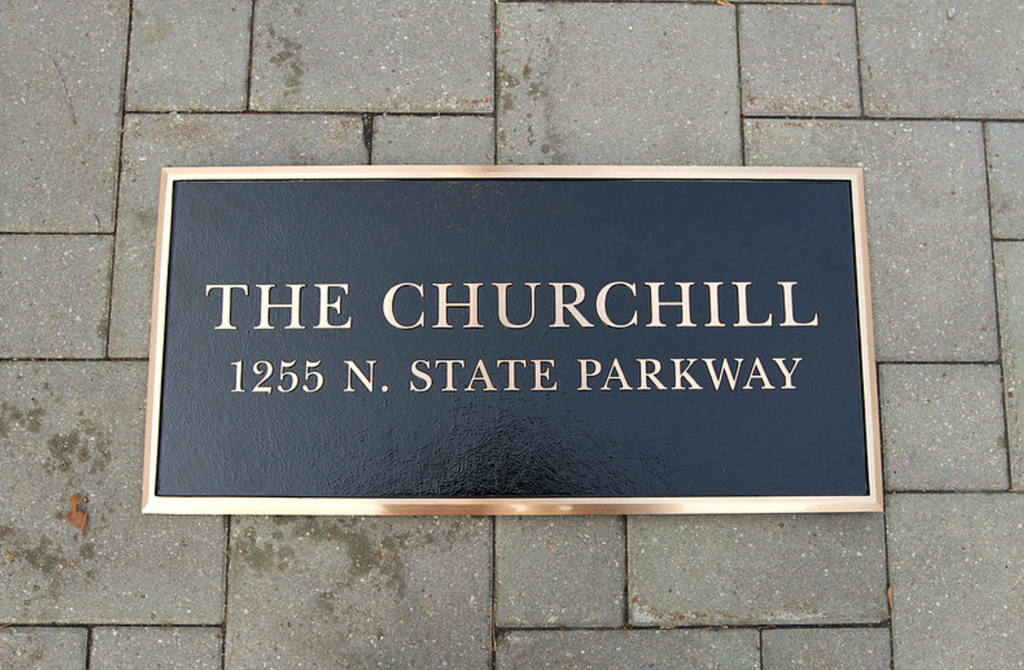
There’s no universal plaque size for an embassy. Ultimately, the dimensions of your plaque will depend on where it’ll be installed and how it’ll be viewed by visitors. To determine the right size, think about details such as:
- Available wall space
- Viewing distance
- Amount of text
- Size and complexity of the seal
- Building scale
- Whether visitors are walking or driving past it
- Surrounding architectural features
For example, a plaque next to the main entrance may need to be much larger than one installed in a hallway.
Also, keep in mind that the amount of information matters here too. If a plaque needs an elaborate crest, two languages, and several names, you’ll naturally need a larger plaque to accommodate all of it and still retain readability.
5. Which Bronze Finish Works Best?
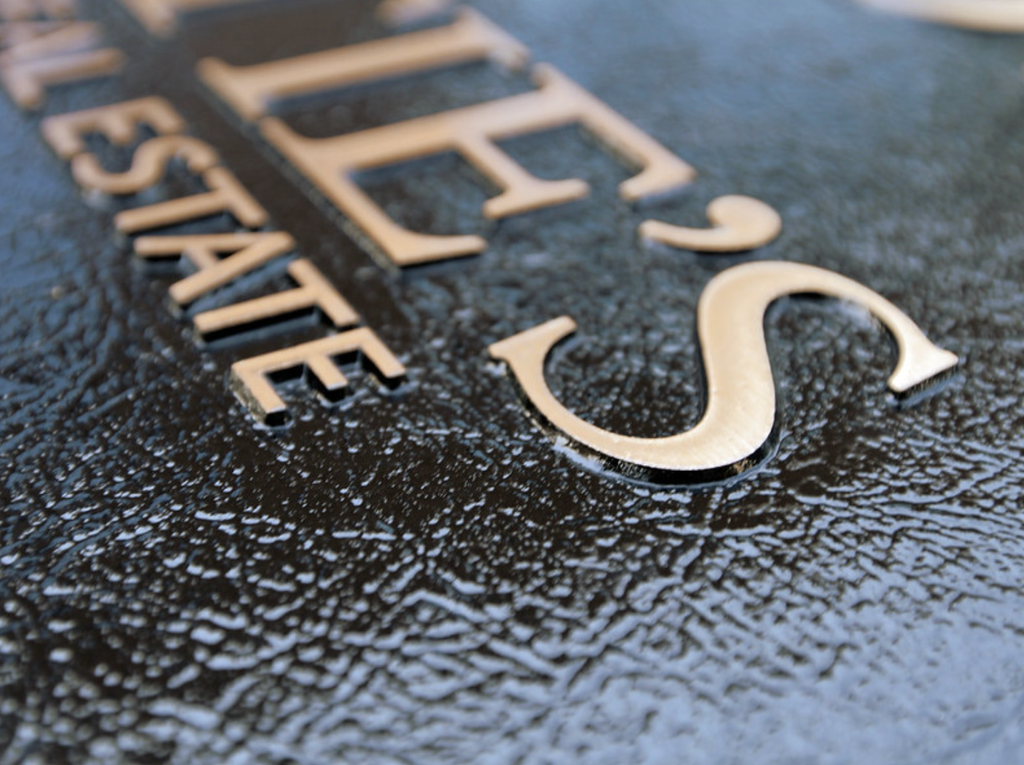
The bronze finish you choose can completely change the look and feel of your plaque. Bronze plaques can have finishes ranging from bright and polished to dark and oxidized. We offer several options, including natural satin brushed bronze, polished bronze, chemical oxidation, and patina finishes.
- Brushed bronze offers a refined but understated look.
- Polished bronze creates stronger shine and contrast.
- Oxidized bronze provides a darker, more traditional appearance.
- Patina finishes can create an aged or historic character.
Don’t forget to think about how the finish may look against the background color. Dark backgrounds are often used for raised bronze lettering because the contrast helps it stand out.
Example: Matching an Old Government Building
Consider a consulate occupying a historic stone building with traditional detailing. A highly polished plaque would likely feel too new and contemporary for this setting.
Instead, choosing a darker oxidized finish with a simple border would better complement the building while maintaining its official appearance.
6. Choose Between Raised or Recessed Details
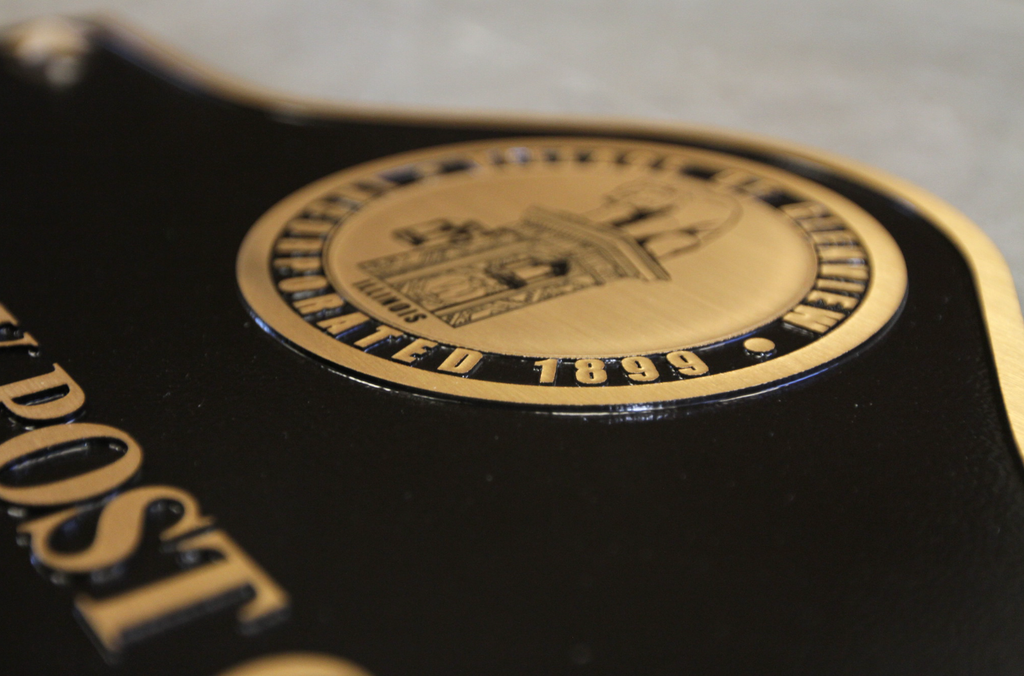
The fabrication method you choose ultimately affects how lettering, seals, and other graphics appear.
Cast Bronze Plaques
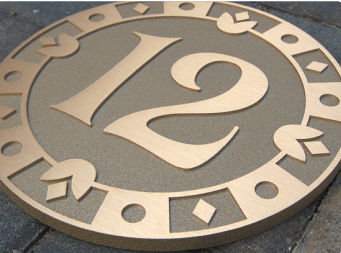
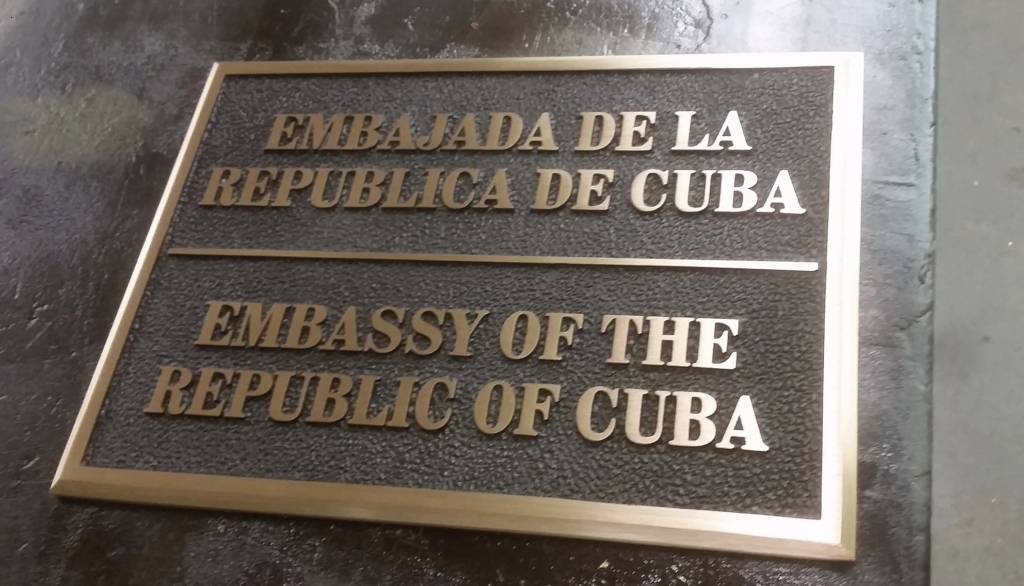
Cast bronze plaques often have raised lettering and graphics against a recessed background to create depth and a traditional appearance. Casting is often a great choice for:
- Formal embassy identification
- Building dedications
- Government seals
- Historical markers
- Commemorative plaques
Etched or Engraved Bronze Plaques
For designs with fine lettering or highly detailed artwork, an etched bronze plaque may be a better option. Etched bronze plaques use recessed graphics that can be paint-filled to allow detailed lettering, logos, and image treatments.
7. Think About Indoor vs. Outdoor Installation
Location can make a big difference in your plaque choices. Bronze is a good choice for both interior and exterior plaques, but outdoor plaques need a clear protective coating to protect the finish against elements including:
- Rain
- Snow
- Sun
- Humidity
- Temperature changes
- Pollution
- Salt air in coastal locations
Keep in mind that bronze also changes in appearance as it ages and can develop a darker patina over time when exposed to these elements. You should consider how the material will age when choosing the initial finish.
What Information Should You Send When Requesting a Bronze Plaque Quote?
The more information we get from the start, the easier it’ll be for us to recommend the best options for your embassy project. When requesting a quote for an embassy plaque, send us:
- Exact plaque wording
- Approved seal, crest, or logo artwork
- Preferred dimensions, if known
- Photos of the installation location
- Wall material
- Indoor or outdoor location
- City and state or country of installation
- Desired finish
- Background color
- Font requirements
- Preferred border
- Desired mounting method
- Required completion or dedication date
It’s fine if you don’t know all the details just yet. The biggest starting points are the content, artwork, available space, and desired appearance.
Choose a Bronze Plaque That Fits the Institution
A bronze plaque embassy or consulate project deserves more thought than choosing a size and adding text to a template. The plaque may represent an entire country, identify an important diplomatic facility, commemorate a significant event, or display an official symbol that needs to be reproduced accurately.
Impact Signs creates custom bronze plaques for government, civic, institutional, and commemorative applications. We can help you determine the appropriate fabrication method, layout, finish, size, and mounting approach for your embassy or consulate project, then provide a proof for review before production.
Contact us to discuss your project or send us your information to request a custom quote.
Frequently Asked Questions About Bronze Plaques for Embassies
Why is bronze used for embassy plaques?
Bronze offers a substantial, traditional appearance and is suitable for long-term indoor or outdoor signage. It can also accommodate raised lettering, detailed seals, custom finishes, background colors, borders, and other architectural details, making it well suited for formal government settings.
Can an official government seal be added to a bronze plaque?
Yes, detailed seals, crests, and emblems can be incorporated into bronze plaques using techniques such as flat relief, bas-relief, photo relief, or etching, depending on the artwork and desired appearance. Approved artwork should be provided and carefully reviewed before production.
Can an embassy plaque include multiple languages?
Yes, a custom bronze plaque can incorporate multiple languages, provided the layout allows enough room for the text to remain readable. Any translations and special characters should be supplied and approved by the embassy or consulate.
Are bronze embassy plaques suitable for outdoor use?
Yes, bronze plaques can be produced for outdoor installation and finished with a protective clear coating. Environmental conditions, mounting surface, finish, and expected natural aging should all be discussed before fabrication.
Can embassy plaques use custom colors?
Yes, backgrounds and selected design elements on embassy plaques can incorporate different colors. Impact Signs offers standard plaque background colors as well as custom color options for certain applications.